
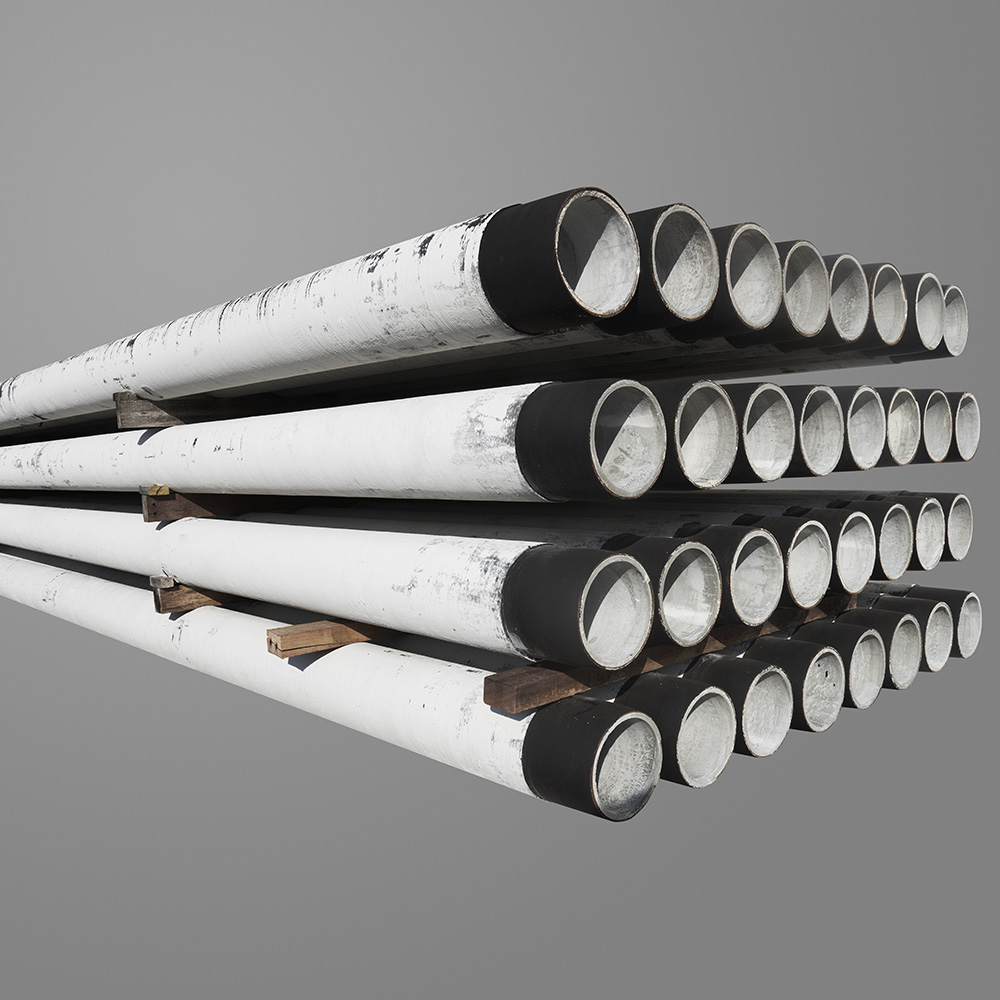
Ductile iron (DI) pipes are engineered to last for generations, but their lifespan and safety depend on what protects their inner walls. The ductile iron body provides the structural strength; the internal lining is the critical barrier between the metal and the fluid it carries.
In the ductile iron pipe industry, BS EN 545 and BS EN 598 are the two defining standards. They set the manufacturing requirements — including the internal lining — according to what is flowing through the pipeline.
EN 545 vs EN 598: the lining breakdown
The fundamental difference between the two standards is the chemical makeup of the fluid they are designed to carry.
| Standard | Primary application | Standard internal lining | External identification |
|---|---|---|---|
| BS EN 545 | Potable (drinking) water | Standard Portland cement mortar or polyurethane | Typically blue or black |
| BS EN 598 | Sewerage and wastewater | High Alumina Cement (HAC) or epoxy | Typically red |
BS EN 545: protecting potable water
Pipes made to EN 545 are designed for drinking water transmission and distribution. The internal lining is typically a centrifugally applied Portland cement mortar.
- How it works. The cement creates a high-pH (alkaline) environment at the pipe wall, which passivates the iron and prevents rust.
- The requirement. The lining must be certified safe for human consumption. It cannot leach harmful chemicals, alter the water’s taste, or promote bacterial growth.
BS EN 598: defending against wastewater
Wastewater is a highly aggressive, corrosive environment. Pipes made to EN 598 are built to survive raw sewage, industrial effluent, and drainage duty. The internal lining is most commonly High Alumina Cement (HAC).
- How it works. In a sewer, bacteria break down organic matter and release hydrogen sulfide (H₂S) gas. That gas reacts with moisture on the pipe walls to form sulfuric acid. High Alumina Cement is specifically engineered to resist this severe acidic attack.
The consequences of using the wrong lining
Specifying or installing the wrong pipe standard has serious consequences for both infrastructure longevity and public health.
EN 545 (water) pipe used for sewage:
- Rapid degradation. Standard Portland cement mortar cannot withstand an acidic environment. The sulfuric acid generated by sewage attacks the cement lining.
- Premature failure. Once the lining is breached, the ductile iron is exposed to highly corrosive wastewater — rapid rust, thinning of the wall, and eventual structural collapse or leakage.
- Environmental hazard. A failed sewer line leaks into surrounding soil and groundwater, with cleanup costs, environmental liability, and regulatory consequences.
EN 598 (sewage) pipe used for potable water:
- Health violations. The High Alumina Cement or heavy-duty epoxies in EN 598 pipe are not formulated or certified for drinking-water contact.
- Contamination risk. These linings could leach unapproved compounds into the water supply, compromising public safety and breaching health requirements.
Choosing the right standard is not only a compliance question. It is the deciding factor in whether a pipeline lasts a hundred years or fails in ten.
Our additional notes for Malaysian projects
For tenders here, we would add:
- The authority names the standard, so confirm it per scope. Public water supply and sewerage in Malaysia sit with different authorities (state water operators and SPAN on the water side; IWK and local authorities on the sewerage side), and each cites its own material schedule. Confirm the cited standard and revision with the authority having jurisdiction before ordering.
- Wastewater is not only domestic sewage. Cooling-tower blowdown, industrial effluent, and warm mineral-bearing discharge are all “EN 598” territory — the aggressive-discharge reasoning is covered alongside the MSCL vs ductile iron comparison.
- Ask for the lining certificate, not a datasheet photo. For potable duty the lining must be shown to be safe for human consumption; for sewer duty the HAC or epoxy lining must be the specified type. Certification documents belong in the submittal.
Where each standard is used
Ductile iron is the rigid, crush-resistant choice for buried and traffic-loaded routes, and the EN 545 / EN 598 split follows the duty:
- Potable water mains, distribution, and plant water (EN 545) — see the water reticulation page.
- Sewerage, drainage, and industrial wastewater (EN 598) — see the sewerage and civil page.
Sanifix supplies ductile iron pipes and fittings — state the standard (EN 545 or EN 598), diameter, and lining on your schedule and we will quote the pipe the duty requires. For a side-by-side of ductile iron against steel reticulation pipe, read MSCL vs ductile iron for water reticulation.