
Waterworks Supply
Electrical & Telecom
Power & Telecom
Underground power and telecom networks in Malaysia need the same envelope: cable pipe or conduit, the fittings to branch and change direction, and marker tape so the next contractor does not cut the cable. Sanifix supplies all three as one package, from Sepang stock.
Send your trench schedule and duct sizes for a quotation.

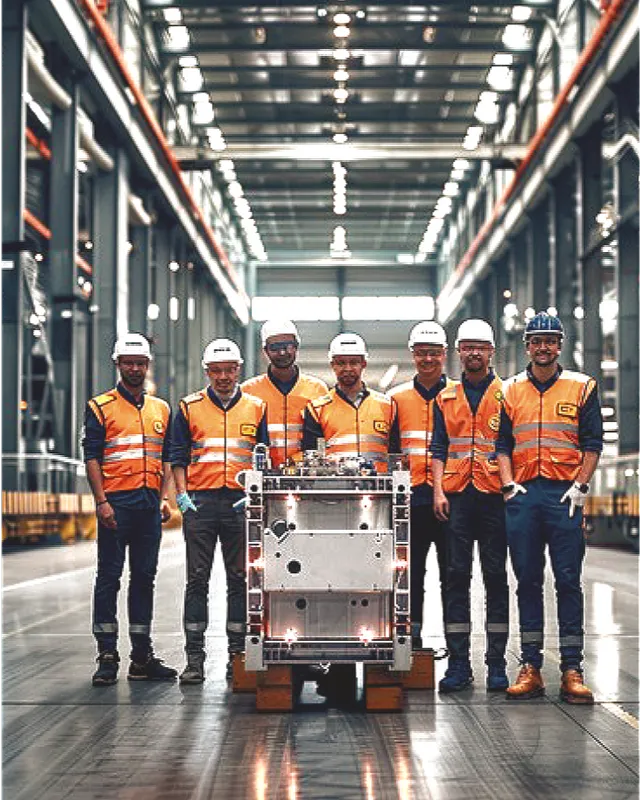

Sanifix is your total solutions-orientated partner in Malaysia
since1977
 Talk to our Technical Team
HDPE cable pipes for trench work
Corrugated HDPE cable pipe is the standard trench duct for TNB distribution, street lighting, and internal development — light coils that two workers can lay, with fittings to branch and bend without cutting every length.
For telecom ducting we stock smooth-wall HDPE PN10 red cable pipe. Confirm duct colour, stiffness class, and joint requirements with the utility before ordering — distribution and transmission scopes differ.
GI pipe and conduit where steel is specified
Mechanical damage risk or earthing and bonding requirements rule out plastics on some runs — that is galvanised steel territory. Our GI pipe is MIG-MELEWAR to BS EN 10255:2004, the successor to BS 1387.
It arrives socket-ended or plain, threaded to BS EN 10226-1 (BS 21), in 6 m lengths. Socket-end 15–100 mm and plain-end 65–350 mm ship from stock.
- BS EN 10255:2004 — threads to BS EN 10226-1 (BS 21)
- Light (brown band), Medium (blue), Heavy (red) series
- Socket end 15–100 mm, plain end 65–350 mm, 6 m lengths
- Hot-dip galvanised or black finish
Warning and detectable tape
Non-metallic ducts cannot be found by a locator. Detectable tape — aluminium-core laminate — gives cable-avoidance tools a target, so the next excavation finds the tape before the duct.
Plain printed tape marks the service visually and suits ducts carrying traceable cables. Bury either type 300–500 mm above the service and keep it continuous over joints. We supply both.
Certification & compliance
SIRIM QAS certified/ Tested and certified by SIRIM QAS International, Malaysia’s national certification body.
JKR recognised/ Suitable for JKR (Jabatan Kerja Raya) public works specifications and tender requirements.
BS EN compliant/ Manufactured to the referenced British/European standard for the product system.
Shop the full range
Specifications-grade materials available from the Sanifix Hardware Shop — request a quote with your BOQ or material schedule.
What belongs in this scope
Every underground cable network in Malaysia — TNB distribution, Telekom fibre, street lighting, internal development — needs the same envelope of materials: cable pipe or conduit, the fittings to change direction and branch, and marker tape so the next contractor doesn’t cut the cable.
- HDPE cable pipes — corrugated types for trench work and smooth-wall PN10 red cable pipe for telecom ducting; lightweight coils speed up installation.
- GI pipe and conduit — galvanised steel protection where mechanical damage risk or earthing/bonding requirements rule out plastics. Our GI pipe is MIG-MELEWAR to BS EN 10255, in Light/Medium/Heavy series.
- Warning and detectable tape — marking above buried services per utility practice.
Compliance context
Utility contractors should confirm the specific duct colour, stiffness class, and joint requirements with the utility (TNB, Telekom, or the local authority) before ordering — requirements differ between distribution and transmission scopes. For GI conduit work, BS EN 10255 (the successor to BS 1387) is the specification reference; our GI spec table page carries the series markings and material requirements from the manufacturer’s data.
Request a cable containment quotation with your trench schedule and duct sizes — we supply pipe, fittings, and tape as one package.
How a cable containment order mobilises
Send the trench schedule
Route, duct sizes, and quantities — a take-off from the drawing set is enough to start.
Package check
We confirm pipe, fittings, and tape as one package, and flag colour or stiffness requirements to settle with the utility before ordering.
Site-ready delivery
Coils, fittings, and tape delivered together from Sepang so the trench never waits open.
Proven on Malaysian projects
Supplying Malaysian projects since 1977 — request project references relevant to your scope.
Knowledge & specification data
The GI pipe schedule to BS EN 10255 and the detectable vs plain tape selection guide are collected below.
GI Pipe Schedule & Properties — BS EN 10255 (MIG-MELEWAR)
Spec tableGalvanised iron welded steel pipe data to BS EN 10255 — Light/Medium/Heavy series markings, chemical composition, mechanical properties, and test requirements.
BS EN 10255 Steel Pipe: What the Standard Covers and How to Specify It
StandardBS EN 10255 explained for Malaysian contractors — what the welded steel tube standard covers, the L1/L2/Medium/Heavy series, and what to confirm before ordering.
Electrical Conduit Sizing & Selection in Malaysia
Buyer guideHow to size and choose buried electrical conduit and cable duct in Malaysia — cable OD, fill, bends, duct banks, GI vs HDPE, and a procurement checklist.
HDPE PN10 Cable Pipes in Malaysia: Selection Guide
Buyer guideHDPE PN10 cable pipe in Malaysia — open-cut vs HDD installation, PE80 vs PE100 wall thickness, SIRIM certification, and how to avoid the spec-to-spec cost trap.
BS 31 vs MS 275 vs MS 61386: Steel Conduit Standards
ArticleBS 31, MS 275, and MS 61386 compared for Malaysian M&E projects — sizing, wall thickness, galvanising classes, and which steel conduit standard to specify.
Class 3 vs Class 4 Galvanized Conduits
ArticleClass 3 pre-galvanized vs Class 4 hot-dip galvanized steel conduit — how each is made, where the zinc fails, and which to specify for Malaysian humidity and data centres.
Steel Conduit vs HDPE Cable Pipe for Underground Cables
ArticleGI steel conduit vs HDPE cable pipe for underground cables in Malaysia: mechanical protection, earthing, installation speed, and when each is right.
Detectable Warning Tape vs Plain Tape for Buried Services
ArticleDetectable vs plain warning tape for Malaysian underground works — how each works, utility acceptance, and where detectable tape is the right specification.