
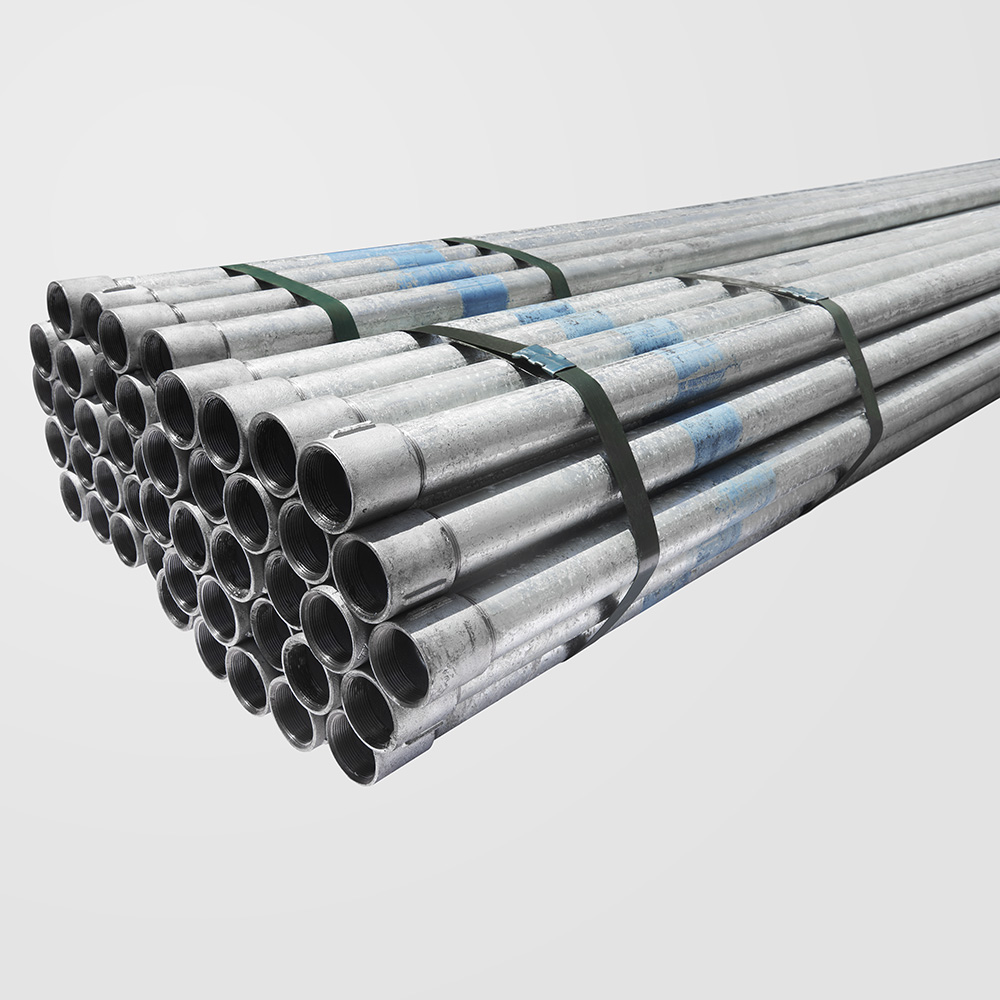
Conduit selection in a metric standard such as MS 275 or BS 4568 is not only about diameter. In these standards, zinc-coated steel conduits are divided into finish classes, and Class 3 (pre-galvanised) and Class 4 (hot-dip galvanised) are the two that matter on a Malaysian M&E schedule. Both use zinc to stop rust, but their manufacturing routes give them fundamentally different engineering profiles — and in a humid, coastal, or data-centre environment that difference decides the life of the cable jacket inside.
Class 3: pre-galvanised (sheet steel)
The defining characteristic of a Class 3 conduit is that the steel is coated with zinc before the pipe is formed.
- The manufacturing process. The factory starts with a continuous roll of sheet steel already galvanised at the mill. That pre-galvanised coil is cut into strips, cold-rolled into a tube, and welded continuously along the seam.
- Engineering implications. Because the zinc is applied before welding, the heat of welding burns the coating away along the seam. Manufacturers usually spray a zinc-rich compound over the exterior weld line to restore some protection, but the internal weld seam is left largely bare steel. The overall zinc layer is also relatively thin.
- Application profile. Moderate corrosion resistance, structurally sound, and intended for dry indoor work — concealed wiring above false ceilings, standard office fit-outs, and similar spaces where moisture exposure is minimal.
Class 4: hot-dip galvanised (inside and out)
Class 4 is heavy-duty corrosion protection, with galvanising done after the conduit is fully formed.
- The manufacturing process. The factory forms raw, uncoated “black” steel strip into a tube and welds the seam. Only after the conduit is complete and chemically cleaned (pickled) is the whole length submerged in a bath of molten zinc at approximately 450 °C.
- Engineering implications. Submerging the finished pipe creates a metallurgical bond between steel and zinc. The molten zinc flows over both the exterior and interior surfaces, sealing the weld seam completely. The resulting coating is significantly thicker and more durable than a Class 3 coating.
- Application profile. Built for harsh environments: outdoor installations, high ambient humidity, underground routing, and heavy industrial facilities. On data-centre scopes — where uninterrupted service and robust infrastructure are the whole point — Class 4 is the default specification.
Technical comparison summary
| Feature | Class 3 (pre-galvanised) | Class 4 (hot-dip galvanised) |
|---|---|---|
| Coating process | Steel coated before rolling and welding | Finished pipe dipped in molten zinc after forming |
| Zinc thickness | Thinner, uniform coating | Thicker, heavy-duty coating |
| Weld seam protection | Vulnerable — zinc compromised during welding | Fully sealed — dipped after welding |
| Internal protection | Minimal along the weld line | Fully coated and protected |
| Ideal environment | Dry, indoor, concealed spaces | Outdoor, high moisture, heavy industrial |
Specifying the wrong class leads to accelerated internal rusting, which degrades the conduit’s structural integrity and can damage the cable jackets pulled through it. Matching the galvanising class to the environment is how the cable management system keeps its integrity for the life of the facility.
Our additional notes for Malaysian procurement
Two things we would add for local projects:
- Humidity is the deciding condition, not rainfall. Malaysian ambient humidity keeps enclosed spaces damp, so routes that look “indoor and dry” — plant rooms, basements, service shafts, loading bays — often justify Class 4 or a documented corrosion strategy. Confirm the environment class with the consultant rather than judging by whether the run sees direct rain.
- Threads and cut ends need attention on both classes. Field cutting and threading exposes bare steel regardless of the coating. The project’s corrosion practice for cut ends (cold-galvanising compound and similar) belongs in the method statement, not left to chance.
How this fits the standards picture
Class 3 and Class 4 are finish classes inside the metric conduit standards. The standard itself — and what it demands beyond dimensions — is covered in BS 31 vs MS 275 vs MS 61386 steel conduit standards. The material decision between steel and plastic comes first, and that trade-off is in steel conduit vs HDPE cable pipe.
For GI pipe and conduit supply, browse G.I. pipes and G.I. fittings. State the finish class per route and we will quote the class the inspection calls for.